Anna Long · 10 September 2026
The Unexpected Role of Hybrid Produce in Coastal Ecosystem Management
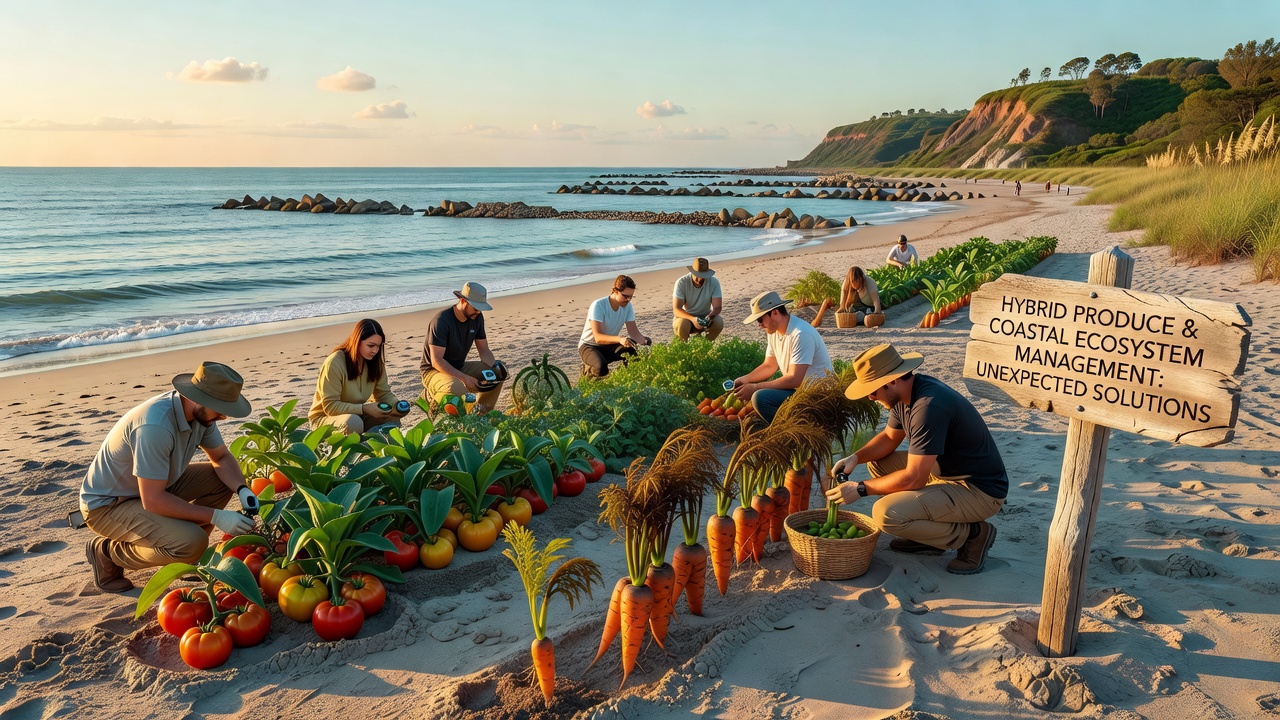
Hybrid produce varieties have entered coastal ecosystem management programs in ways that extend beyond traditional agriculture, and researchers continue to document their contributions to soil stabilization, salinity buffering, and habitat connectivity along shorelines worldwide. Government agencies and academic teams track how cross-bred crops such as salt-tolerant tomatoes, hybrid sea grasses, and engineered root vegetables integrate into restoration sites where native species alone struggle against rising tides and erosion. Data collected from multiple regions show measurable reductions in sediment loss when these hybrids occupy buffer zones between farmland and intertidal areas.
Defining Hybrid Produce in an Ecological Context
Plant breeders develop hybrid produce by crossing parent lines that carry complementary traits for drought resistance, salt tolerance, and rapid biomass accumulation, and these same characteristics prove useful when the plants move from commercial fields into coastal restoration plots. Observers note that varieties originally bred for inland markets now appear in pilot projects managed by coastal authorities in the United States, Australia, and the European Union. The plants establish root networks that bind sandy soils, while their above-ground growth slows wind-driven sand movement and creates micro-habitats for invertebrates.
Current Pressures on Coastal Zones
Coastal managers face accelerating shoreline retreat, saltwater intrusion into aquifers, and nutrient runoff from adjacent agriculture, and hybrid produce enters these equations because selected varieties tolerate brackish conditions that kill conventional crops. Studies conducted along the Gulf of Mexico and the Mediterranean coast record that certain tomato and leafy-green hybrids maintain photosynthetic activity at salinity levels twice that of seawater, allowing them to function as living filters that uptake excess nitrogen before it reaches sensitive seagrass beds. Figures released by national environmental agencies indicate that pilot sites using these hybrids reduced measurable nitrate concentrations in adjacent tidal creeks by 18 to 27 percent during the first two growing seasons.
Mechanisms of Ecosystem Service Delivery
Root exudates from hybrid produce varieties stimulate microbial communities that accelerate organic matter decomposition, and the resulting increase in soil carbon supports dune-building processes when combined with sand-trapping fences. In addition, the timing of flowering in many hybrids aligns with pollinator migration patterns along flyways that follow coastlines, providing nectar resources during periods when native flowering plants remain sparse. Australian research stations have recorded higher counts of native bee species in hybrid buffer strips compared with adjacent unrestored dunes, although long-term population trends require further monitoring.
Implementation Examples Across Regions
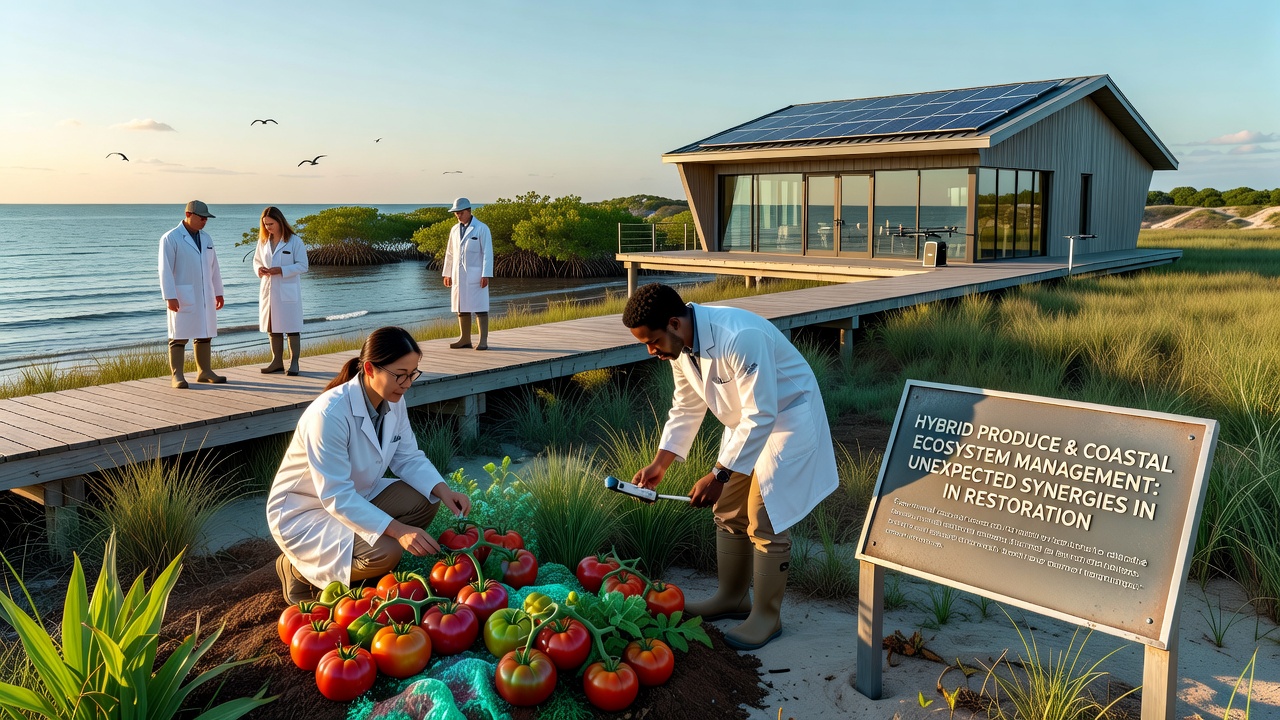
Along the southeastern United States Atlantic coast, state restoration teams have incorporated hybrid sweet potato varieties into living shoreline designs where conventional Spartina plantings faced repeated washout during storm seasons. The tubers anchor deeper into substrate layers while vines create surface cover that reduces rain-splash erosion. In the Baltic region, hybrid barley lines developed for saline soils now appear in experimental strips between dikes and reed beds, and preliminary measurements show decreased wave energy reaching the inner marsh edge. Canadian coastal programs in the Maritime provinces report similar use of hybrid brassica species to stabilize tidal riverbanks, with biomass harvested annually for livestock feed rather than left to decompose in place.
Research Findings and Quantitative Outcomes
Peer-reviewed papers published through 2025 document that hybrid produce buffers can sequester between 2.1 and 3.4 metric tons of carbon per hectare annually when managed under rotational harvest regimes, and these rates exceed those measured in adjacent unrestored scrub habitats. Soil core samples collected by teams from multiple universities reveal increased aggregate stability within 18 months of planting, which correlates with lower rates of particulate transport during storm surge events. A joint report prepared by the National Oceanic and Atmospheric Administration and the Commonwealth Scientific and Industrial Research Organisation outlines standardized monitoring protocols that coastal authorities adopted beginning in early 2025, allowing cross-site comparisons of hybrid performance under varying tidal regimes.
Policy Integration and September 2026 Milestones
Regulatory frameworks in several countries now recognize hybrid produce plantings as eligible practices under coastal resilience funding streams, and updated guidance scheduled for release in September 2026 will specify planting densities and maintenance intervals that qualify for cost-share programs. The European Environment Agency has circulated draft criteria that link hybrid buffer performance metrics to broader biodiversity targets, while Australian state agencies prepare complementary monitoring templates that align with national coastal adaptation strategies. These policy documents reference field data rather than modeling projections alone, and they require annual reporting of both vegetation cover and adjacent water quality parameters.
Limitations and Ongoing Monitoring Needs
Hybrid produce plantings require periodic replacement because many varieties lack the perennial growth habit of native coastal species, and managers must balance harvest cycles against peak storm seasons to avoid leaving exposed soil. Genetic drift from escaped hybrid pollen into nearby wild populations remains under study, and agencies have established buffer distances between restoration sites and protected native plant communities. Continued observation through 2026 and beyond will determine whether repeated introductions alter local genetic diversity or introduce unintended pests that affect both agricultural and natural systems.
Conclusion
Hybrid produce has moved from agricultural fields into coastal management toolkits because its physiological traits address specific stressors that native vegetation alone cannot always mitigate, and quantitative data from established projects support continued evaluation of these varieties. Coordinated monitoring programs scheduled to expand in September 2026 will supply the next round of comparable metrics across regions, allowing authorities to refine planting guidelines and funding criteria. The integration remains experimental in many locations, yet existing records demonstrate measurable contributions to sediment retention, nutrient filtration, and habitat support when site conditions match the tolerances of selected hybrids.