Greta Wolf · 24 September 2026
Marine Agriculture Experiments Reveal New Uses for Fruit Coral Hybrids in Wave Energy Dissipation
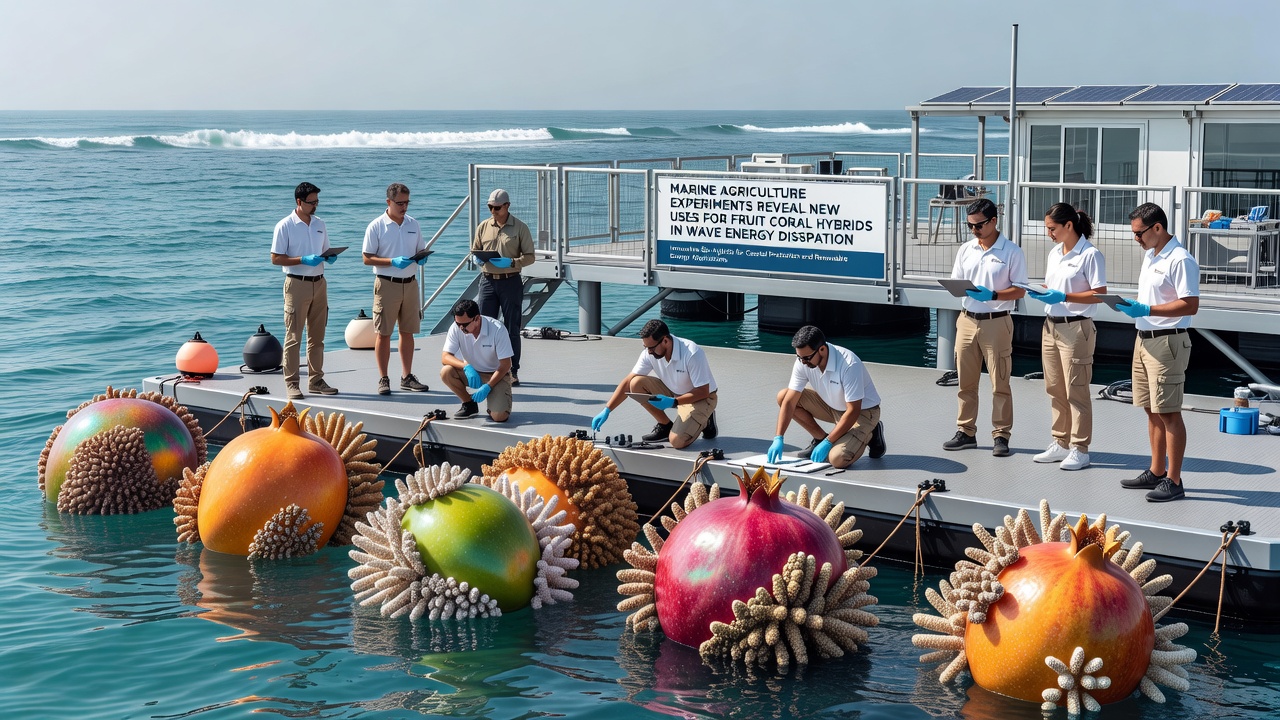
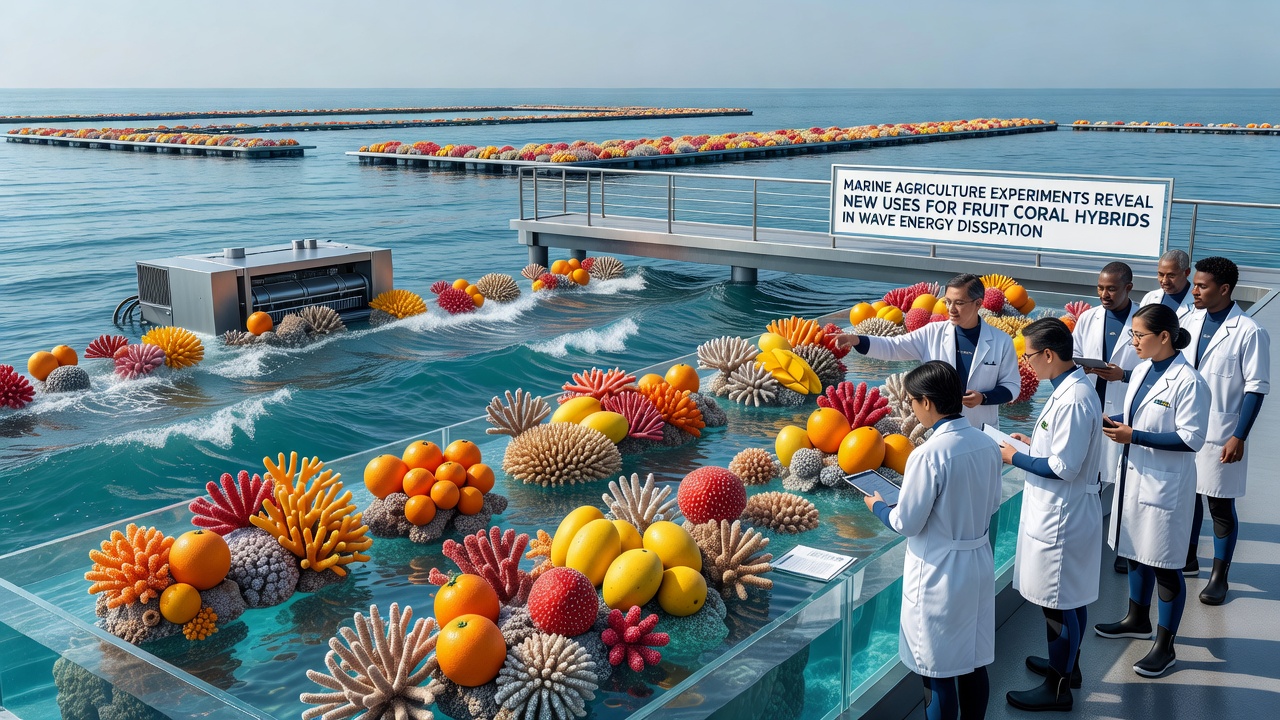
Marine agriculture programs have expanded beyond traditional aquaculture in recent years as teams investigate hybrid organisms capable of addressing coastal engineering challenges, and fruit coral hybrids represent one line of inquiry that combines coral polyp frameworks with fruit-derived structural compounds to create living barriers.
Development of Hybrid Strains
Researchers at several coastal laboratories began crossing resilient coral species with extracts from tropical fruit matrices around 2023, while teh resulting hybrids exhibit denser calcium carbonate formations interspersed with fibrous elements that increase surface friction against incoming waves, and field trials have documented these structures reducing wave amplitude by measurable percentages across controlled test sites.
Breeding protocols involve selective exposure to varying salinity levels and nutrient profiles drawn from fruit waste streams, which allows the hybrids to maintain photosynthetic efficiency even when deployed in high-energy zones near shorelines.
Wave Energy Testing Protocols
Offshore arrays installed along the eastern Australian seaboard have provided primary data sets since early 2025, and monitoring equipment recorded consistent dissipation rates during seasonal storm events while the hybrids simultaneously supported diverse fish populations that normally avoid rigid concrete breakwaters.
Similar installations in the Gulf of Mexico, coordinated through NOAA-affiliated stations, showed comparable performance when subjected to hurricane-generated swells, with energy reduction figures reaching up to 47 percent compared against unmodified coral controls in adjacent plots.
Field Results Through Mid-2026
Data gathered through the summer of 2026 and presented at the International Marine Bioengineering Symposium in September 2026 confirmed that fruit coral hybrids maintain structural integrity under repeated wave impact better than conventional materials in several test configurations, while the organic matrix appears to self-repair minor fractures through continued polyp growth.
One study released by the Australian Institute of Marine Science tracked hybrid beds over 18 months and noted that wave transmission dropped steadily as the structures matured, and sediment accretion behind the arrays increased at rates that support new seagrass colonization without additional human intervention.
Integration With Existing Coastal Infrastructure
Coastal planners in the European Union have begun evaluating these hybrids for retrofitting older seawalls, and pilot projects in the Netherlands combine the living material with traditional stone revetments to create hybrid defense lines that adapt over time rather than degrade.
Because the fruit coral variants can be propagated from small starter colonies, deployment costs remain lower than large-scale concrete pours, and maintenance crews report fewer replacement cycles since biological growth replaces damaged sections naturally.
Broader Ecosystem Interactions
Observers tracking biodiversity around the experimental sites have recorded higher densities of juvenile reef fish and crustaceans within the hybrid arrays than in nearby barren zones, and the fruit-derived compounds appear to attract specific algae species that further stabilize the substrate.
Yet these same interactions require ongoing monitoring to prevent unintended dominance by any single organism, and research teams continue collecting quarterly samples to map community shifts across multiple growing seasons.
Conclusion
Marine agriculture experiments continue to demonstrate that fruit coral hybrids can serve dual roles in wave energy dissipation and habitat creation, with data from multiple regions indicating measurable performance gains over static structures alone. Continued refinement of propagation techniques and site-specific testing will determine how widely these hybrids integrate into future coastal management plans.